


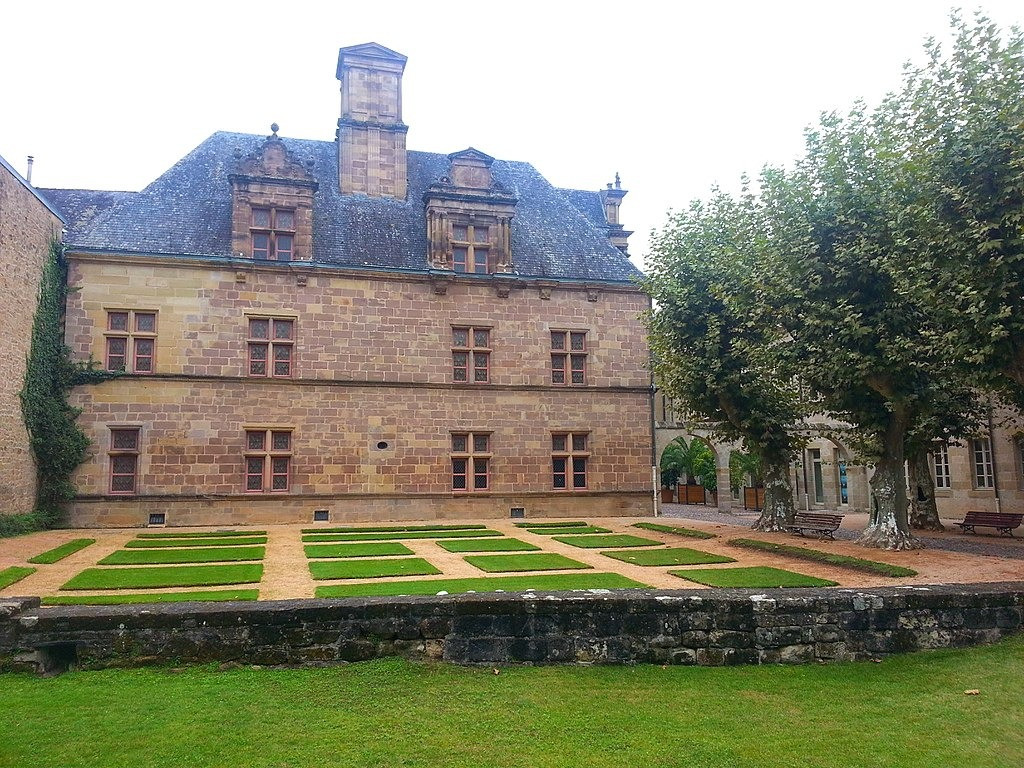
1. The Labenche Museum
The Labenche Museum holds the ‘Musée de France’ designation. Through its permanent exhibitions, it traces the art and history of Brive-la-Gaillarde and its surroundings, with collections dating back to prehistoric times.
The building itself is an architectural masterpiece dating from the Renaissance. Built in the mid-16th century by a nobleman close to the King, the building was listed as a Historic Monument in 1886 and passed into the ownership of the town of Brive at the start of the 20th century.
The Labenche Museum comprises 15 exhibition rooms and houses collections that are unique in France, notably 17th-century tapestries from the English Royal Tapestry Works, as well as the piano belonging to the composer Claude Debussy and a wealth of prehistoric artefacts.
With around 11 major collections and over 5,000 objects, the museum showcases the rich history and heritage of Brive and its surroundings through various themes: archaeology, crafts, folk traditions…
2. The Edmond Michelet Museum
Also known as the Museum of the Resistance and Deportation, this museum is entirely dedicated to the Second World War and the events that took place in France and in Corrèze.
The museum is housed in the family home of Edmond Charles Octave Michelet. An early member of the Resistance, he was arrested by the German police in 1943 and deported to Dachau; following the Liberation, he became Minister of the Armed Forces in de Gaulle’s government.
The permanent and temporary exhibitions are open to the general public and school groups. The museum’s collections consist of objects donated by former Resistance fighters and deportees, as well as acquired graphic and printed documents.
Spread across nine exhibition rooms, the original documents (leaflets, photographs, ration cards, etc.), artefacts and works of art cover various aspects of the Second World War, notably the Resistance and deportation, the Vichy regime and its propaganda, as well as daily life under the Occupation right up to the Liberation.
3. The Walnut Museum in Saillac
About 30 minutes from Brive-la-Gaillarde, discover Les Quatre Demoiselles, the museum where you can eat and drink. The Walnut Museum in Saillac, Corrèze, offers a unique museum experience.
In the museum’s vaulted hall, visitors can watch a meeting of the members of the CIAN (International Circle of Friends of the Walnut), which uses sound and images to present the history of this very special nut.
You’ll discover the importance of walnut cultivation in local life, its medicinal uses, its culinary properties…
The Musée des Quatre Demoiselles also has a café and a shop where you’ll find artisanal and local walnut-based products. The small village of Saillac is also situated on the Walnut Route.
4. The Bovetti Chocolate Museum
Just 20 minutes from Brive-la-Gaillarde, this museum combines history and culinary delights in a single visit. Created by master chocolatier Valter BOVETTI with the aim of sharing his passion, the Bovetti Chocolate Museum takes you on a journey through the history of cocoa, from its discovery to the production of chocolate. The tour takes you to Santo Domingo, Madagascar… You’ll be able to watch the artisanal production of chocolate bars and spreads.
After exploring the secrets of the production process, it’s time to get hands-on. Become a chocolatier for the duration of a workshop and create a chocolate moulding to take home with you. Finally, it’s time for a tasting session featuring delicious chocolate treats.
Opening times vary during and outside school holidays. It is advisable to book in advance to secure a dedicated time slot. The Bovetti Museum is adjacent to the chocolate factory’s artisan workshop. You can also visit the shop to take home your favourite chocolate treats. If you’re flying home, be mindful of the quantities and where you pack these items in your suitcase.
5. The Musée des Pans de Travassac
Ten minutes from Brive, in the village of Donzenac, lies a site that is unique in Europe. Les Pans de Travassac is a site of steep cliffs that brings to life the ancestral craft of slate quarrying. It’s an opportunity to discover stonework during a spectacular walk along the slate faces.
This former quarry, now developed for public access, and its 30-metre-high cliffs were used to shape the slates for local roofs, as well as for certain famous monuments such as the Abbey of Mont-Saint-Michel.
Right at the heart of a tunnel lies the Pans de Travassac Museum, which showcases the history and craft of the slate cutters.
The site is closed during the winter season and is open from April to early November, by booking for groups of 20 people and with free admission on Sunday afternoons in May, June, September and October. In July and August, the Pans de Travassac are open every day, mornings and afternoons.
Book your flight to Brive-la-Gaillarde
Photo: Gilles Guillamot