


Which electronic devices are affected?
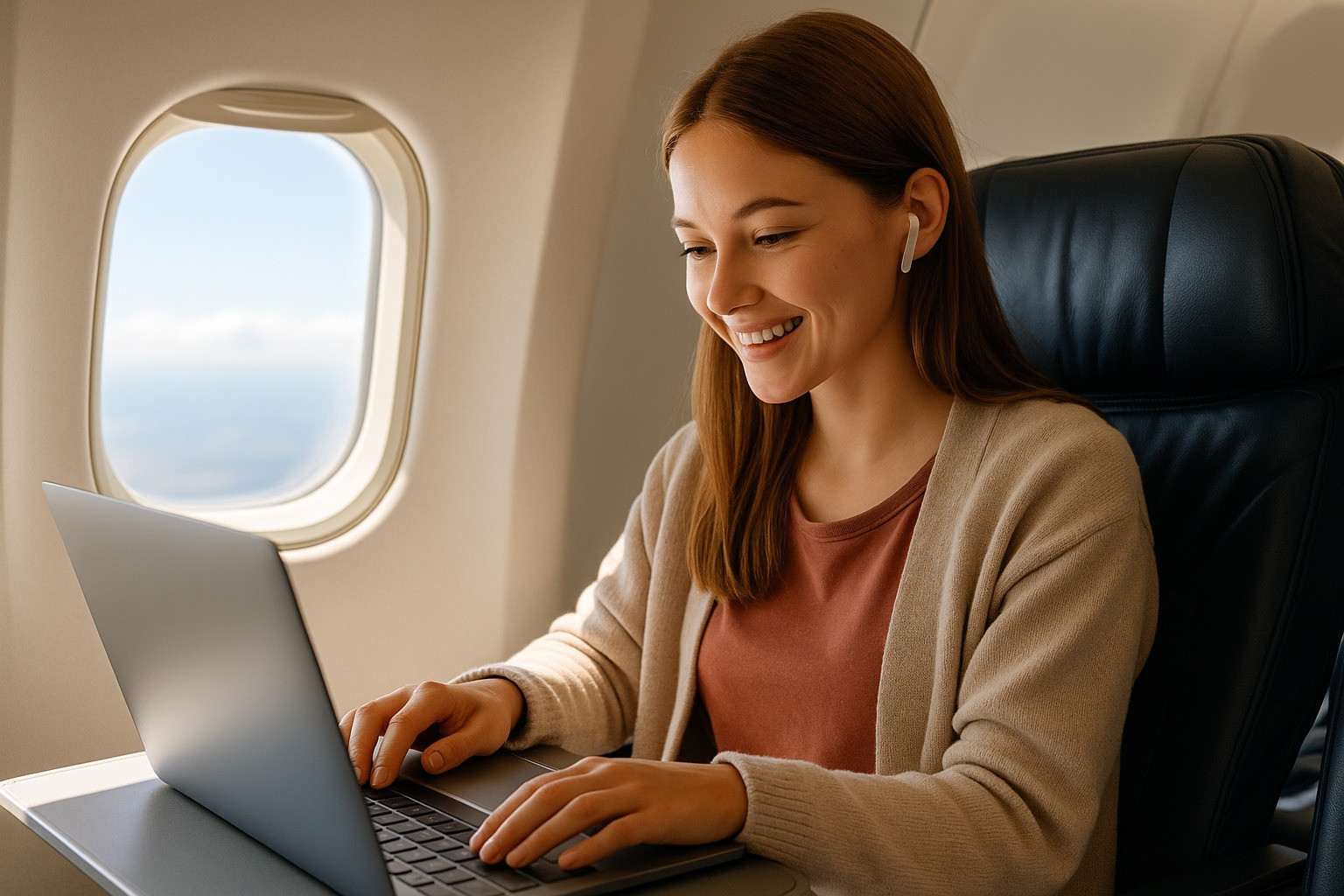
Portable electronic devices include, amongst others, smartphones, tablets, laptops, e-readers and even Bluetooth headphones. All these devices are subject to specific rules, designed to ensure the safety of everyone on board.
The right time to use your electronic devices
Before take-off and during landing
During these critical phases of the flight, you will be asked to stow larger devices, such as laptops, securely in the designated overhead compartments or under the seat in front of you.
Smaller devices, however, such as smartphones and tablets, may be kept in your hand, provided they are in flight mode and are held securely or stowed in the seat pocket.
During the flight
Once at cruising altitude, the use of electronic devices in-flight becomes more flexible. Thanks to recent decisions by the European Aviation Safety Agency (EASA), some flights now allow 5G connectivity on board, thereby removing the strict requirement to use aeroplane mode on certain European airlines. However, some airlines continue to recommend using aeroplane mode to minimise the risk of interference with navigation equipment.
The correct use of electronic devices
Airplane mode or full connectivity?
Airplane mode cuts off all network connections to prevent any interference with on-board systems. Whilst some European airlines are now trialling 5G in-flight, others still prioritise maximum safety, and the use of airplane mode remains recommended on their flights.
Safe charging and storage
Lithium batteries require special attention. According to EASA’s 2025 recommendations, it is essential to carry batteries and chargers in your hand luggage, never in hold luggage.
You should also check the restrictions on high-capacity batteries (over 100 Wh).
Are there any additional charges?
The use of electronic devices on board is free of charge and incurs no additional fees.
Feel free to use your devices to read, play games, work or watch your favourite TV series during your flight.
The reasons behind these in-flight rules
The main reason for the restrictions on electronic devices during flights is safety.
Although modern technology significantly reduces the risk of electromagnetic interference, the precautionary principle remains essential in aviation.
Top tips: Travel smart with your electronic devices
Here are a few practical tips to make the most of your in-flight experience:
- Download films, music or essential documents in advance for quick offline access.
- Make sure your devices are fully charged before boarding.
- Bring a portable charger to cover any potential battery failure.
- Follow the instructions given by the cabin crew to ensure a pleasant experience for all passengers.
Chalair, drawing on its years of experience in air travel, always puts your safety and comfort first. By following these simple tips and complying with current regulations, you are guaranteed a pleasant and hassle-free journey.
Discover all our destinations and enjoy scheduled or seasonal flights tailored to your needs, whether you’re travelling for business or pleasure.
Using electronic devices in-flight has never been easier or safer, provided you follow the rules carefully. At Chalair, your peace of mind and satisfaction are our top priority. Let’s set off on new adventures!