


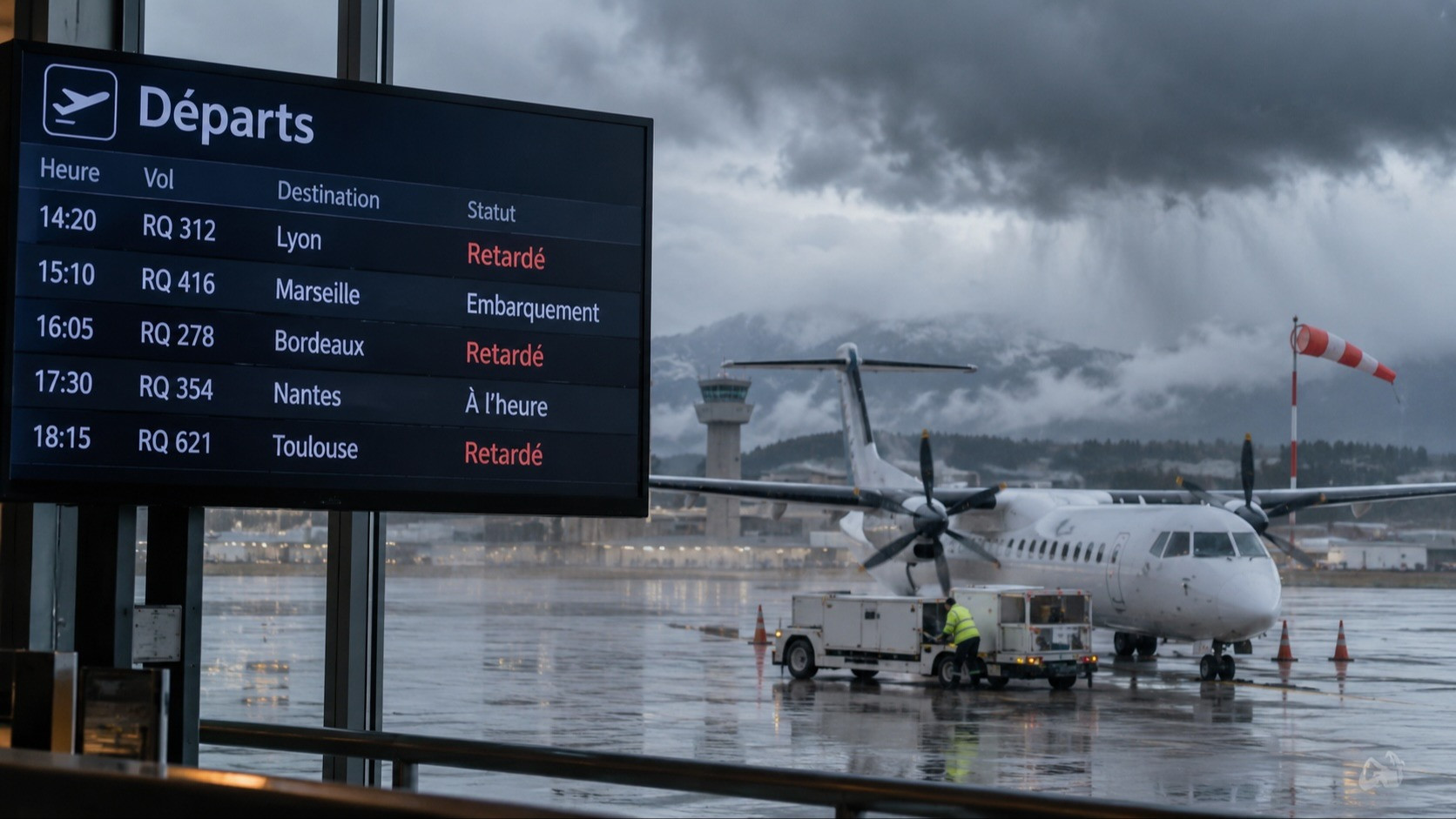
A decision based on actual conditions
Before takeoff or landing, pilots check the current weather conditions and forecasts. They also check the aircraft’s and airport’s equipment, as well as the runway lighting and its surroundings. Therefore, there is no single rule regarding wind or visibility that applies to all flights.
The weather can change very quickly. In that case, the plane may have to wait on the tarmac. Upon arrival, if it cannot land under favorable conditions, it may climb back up instead of landing—this is called a go-around. It may then wait or land at another airport.
Fog: When the runway isn't clearly visible
In foggy conditions, the decisive factor is often the runway visual range, known as RVR (Runway Visual Range). It indicates what the flight crew can actually see along the runway, including its markings. Even if the airport appears clearly visible, the runway may not be visible enough to allow the aircraft to land safely.
When visibility is low, the airport implements procedures tailored to its facilities. Aircraft and vehicle movements are more strictly regulated. As a result, fewer aircraft can take off or land at the same time. If visibility remains too low, the aircraft will have to wait or land at another airport.
Strong winds: Wind direction is just as important as wind speed
A strong wind does not automatically prevent a flight. Its direction relative to the runway, its gusts, and how it changes are just as important. Crosswinds and sudden changes near the ground—known as wind shear—require special attention during takeoff and landing.
Conditions are not the same for all aircraft or all runways. If wind gusts are too strong or too variable, the aircraft may have to wait, use a different runway, or abort its landing—even if the wind conditions seem generally acceptable.
Storm: Diverting and Regulating Traffic
A thunderstorm can cause lightning, heavy rain, hail, turbulence, and sudden changes in wind direction. Pilots avoid flying through thunderstorm areas. As a result, the plane may have to take a detour, wait, or arrive later.
Airplanes must then fly through areas where the sky remains clear. Since there are more of them on the same routes, traffic slows down. A thunderstorm far from your airport can therefore also delay your flight.
Regional Flight: Why Can Delays Spread?
A regional flight follows the same safety rules as all other flights. On short routes, the same aircraft often operates several flights throughout the day. If it falls behind schedule on the first flight, that delay may carry over to the next one.
Every airport is different: runways, lighting, facilities, and the terrain surrounding the airport. Even with the same level of fog, one airport may continue to handle flights, while another may have to slow down or suspend operations. The most important thing is to maintain safe operating conditions.
Delays and Diverted Flights: Two Different Situations
A delay means that the plane has to wait before taking off or landing. A diversion means that it lands at a different airport because it cannot land safely at the scheduled airport.
This doesn't necessarily mean there's a malfunction or an emergency. It's a decision made for safety reasons. The airline then arranges the rest of the trip based on the situation.
What to Do in Case of a Delay or Diversion
The weather can change quickly. Here are a few simple steps to stay informed and avoid unnecessary stress:
- Go to the airport at the scheduled time, unless the airline officially notifies you of a new schedule.
- Turn on notifications for your booking and make sure your phone is charged.
- If the plane lands at a different airport, keep your boarding pass and receipts. Before paying for transportation or a hotel yourself, ask what options the airline has available.
- If you have purchased an add-on, review the terms and conditions ofthe airline'sflight delay insurance.